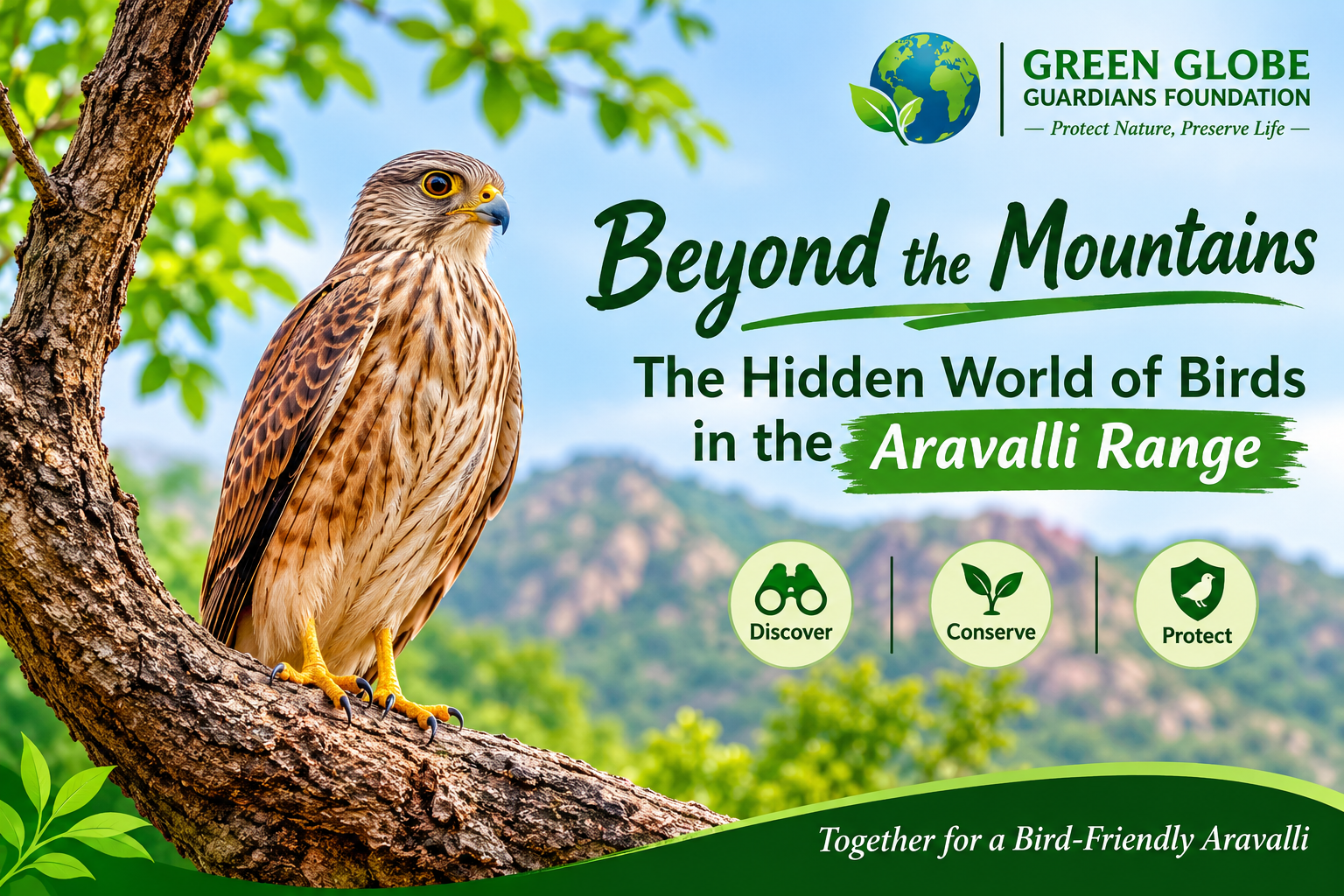
Beyond the Mountains: The Hidden World of Birds in the Aravalli Range
Posted on November 19, 2026
A story of extraordinary bird diversity, ecological connections and the urgent need to protect one of India’s oldest mountain landscapes.
The Aravalli Range is often recognised for its ancient rocky hills, forests and ecological importance. But beyond its striking landscapes lies another fascinating world — a world filled with feathers, flight, calls and remarkable adaptations.
From the colourful Indian Peafowl to elusive flycatchers, hunting raptors, insect-eating birds and seasonal visitors travelling across continents, the Aravallis provide important habitats for an extraordinary variety of birdlife.
These mountains are not simply a place where birds live. They are a living network of forests, scrublands, grasslands, rocky slopes, seasonal streams and water bodies that sustain different bird communities throughout the year.
A Surprising Discovery: How Many Birds Live in the Aravallis?
The bird diversity of the Aravalli landscape is more remarkable than many people realise.
A case study published by the Food and Agriculture Organization (FAO) documented 201 bird species at Aravali Biodiversity Park, Gurugram, as of June 2020, based on six years of birdwatching records submitted to eBird.
Another study in Mount Abu Wildlife Sanctuary, Rajasthan, documented 201 bird species across different elevations and habitats.
Research conducted in Jhunjhunu district, Rajasthan, recorded 101 bird species during observations from February 2011 to January 2013.
These findings demonstrate the remarkable diversity of birdlife across different parts of the Aravalli landscape. They also remind us that individual forests, valleys and habitats can support surprisingly rich bird communities.
Note: These are separate site-specific studies conducted during different periods. They should not be interpreted as a total species count for the entire Aravalli Range.
Meet the Feathered Residents of the Aravallis
The Aravalli ecosystem supports birds with remarkably different appearances, behaviours and ecological roles.
1. Indian Peafowl – The Pride of Indian Landscapes
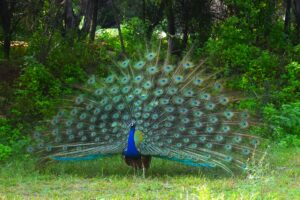
The Indian Peafowl is among the most recognisable birds of the Indian subcontinent. Its brilliant plumage, elaborate courtship display and loud calls make it an unforgettable presence in woodland edges, scrublands and open landscapes.
2. Black Francolin – The Voice of the Grasslands
Often recognised by its distinctive calls, the Black Francolin is associated with grasslands, scrub and agricultural landscapes. Its presence highlights the importance of maintaining open habitats alongside forests.
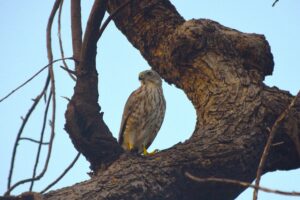
3. Raptors – The Silent Guardians of the Sky
- Birds of prey, including eagles, hawks, falcons and other raptors, occupy important positions in the food web. Their hunting behaviour helps regulate populations of smaller animals. The health of their populations also depends on suitable nesting sites and adequate prey.
4. Flycatchers and Warblers – Small Birds, Big Ecological Roles
Small insect-eating birds are an important part of the Aravalli ecosystem. Flycatchers and warblers feed on insects and other small invertebrates, helping maintain ecological balance.
Seasonal records from Aravali Biodiversity Park include Black Redstarts, Common Stonechats, flycatchers, wagtails, pipits and several species of warblers.
5. Owls and Night Birds – The Hidden Side of the Forest
- While many birds are active during daylight, owls and other nocturnal species bring another dimension to forest biodiversity. Their presence reminds us that the ecological life of the Aravallis continues long after sunset.
A Journey Across Seasons: The Aravallis as a Habitat for Migratory Birds
One of the most fascinating aspects of the Aravalli bird community is its seasonal diversity.
Not every bird seen in the Aravallis is a permanent resident. Some species visit during particular seasons, while others use suitable habitats as temporary stopover or wintering grounds.
According to the FAO’s account of Aravali Biodiversity Park, several winter visitors arrive from breeding areas in the Western Himalayas, Central Asia and beyond.
Documented winter visitors include:
- Common Kestrel
- Black Redstart
- Common Stonechat
- Variable Wheatear
- Eurasian Wryneck
- Taiga Flycatcher
- Red-breasted Flycatcher
Seasonal changes in temperature, food availability, vegetation and water resources influence which birds can be observed in particular habitats.
This makes birdwatching in the Aravallis an ever-changing experience.
Why Birds Matter More Than We Think
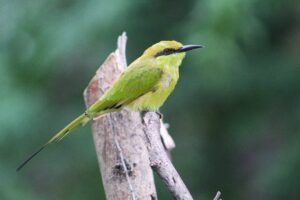
Birds are not simply beautiful components of nature. They perform ecological functions that help sustain healthy landscapes.
Natural pest control: Insectivorous birds consume large numbers of insects and other invertebrates.
Seed dispersal: Fruit-eating birds help distribute seeds, contributing to natural vegetation regeneration.
Pollination: Some nectar-feeding birds contribute to the pollination of flowering plants.
Scavenging and nutrient recycling: Certain birds, particularly vultures, help remove animal remains and support ecosystem health.
Environmental indicators: Changes in bird populations and species composition can provide valuable information about habitat quality and environmental disturbance.
When bird diversity declines, the consequences can extend far beyond the birds themselves.
The Growing Threats to Aravalli Birdlife
Despite their ecological importance, the Aravalli habitats face increasing pressure from human activities.
- Habitat destruction: Deforestation and land conversion reduce nesting, feeding and shelter opportunities.
- Mining and quarrying: Disturbance and habitat fragmentation affect the continuity of natural landscapes.
- Urban expansion: Roads, buildings and infrastructure development can isolate bird habitats.
- Loss of native vegetation: The replacement of diverse native plant communities can reduce food and nesting resources.
- Water scarcity: The degradation of seasonal streams and water bodies affects birds, particularly during dry periods.
- Pollution and disturbance: Waste dumping, pesticides, noise and human interference can affect bird behaviour and habitat quality.
Even a small patch of woodland or scrubland can be important for birds when larger natural habitats are becoming fragmented.
Restoring the Aravallis Means Protecting Their Birds
The restoration of degraded landscapes offers an important opportunity for biodiversity conservation.
The Aravali Biodiversity Park in Gurugram provides an encouraging example. A severely degraded former mining landscape has been transformed through ecological restoration, native planting, community participation and conservation initiatives.
The FAO case study highlights how the restoration of native vegetation and diverse habitats has supported the return and documentation of wildlife, including a rich bird community.
Conserving the Aravallis requires more than planting trees. It req
uires protecting existing forests, restoring native vegetation, maintaining grasslands, conserving water bodies and safeguarding wildlife corridors.
Community participation, scientific monitoring, responsible development and environmental education must become central to these efforts.
What Can We Do to Protect Aravalli Birds?
Every individual and institution can contribute to bird conservation.
- Protect and restore native trees, shrubs and grassland habitats.
- Avoid disturbing nests and breeding birds.
- Support local bird surveys and citizen-science initiatives such as eBird.
- Reduce plastic waste and pollution in natural habitats.
- Promote awareness among students and local communities.
- Encourage responsible ecotourism and nature education.
- Support conservation programmes that protect natural habitats rather than focusing only on ornamental plantation.
Conclusion: When We Protect Birds, We Protect the Aravallis
The beauty of the Aravalli Range is not limited to its hills and forests. It also lives in the morning calls of birds, the seasonal arrival of migratory visitors, the movement of raptors across open skies and the quiet activity of small birds among native vegetation.
Every bird species represents a connection within a much larger ecological system.
The documented diversity across Gurugram, Jhunjhunu and Mount Ab
u demonstrates why the Aravallis deserve greater attention as an important landscape for avian conservation.
But this richness cannot be taken for granted. Habitat destruction, fragmentation and environmental degradation threaten the ecological connections that sustain birdlife.
Protecting the Aravallis means protecting the forests, grasslands, water bodies and wildlife corridors that birds depend upon.
Because a mountain landscape is truly alive not only when its forests stand green, but also when its skies remain filled with birds.
Green Globe Guardians Foundation – Protecting Nature, Preserving Biodiversity and Building a Sustainable Future.
Author Credit: Gaurav Panwar, Research Scholar, Department of Environmental Science, Central University of Rajasthan, Rajasthan, India.